Medical office buildings present a unique energy efficiency challenge. They run long hours — often 7 AM to 8 PM six days a week — with strict indoor air quality and temperature requirements. Patient comfort is non-negotiable, which means facility managers are often reluctant to touch the HVAC system for fear of disrupting operations.
The result: a lot of well-intentioned building managers running systems at settings that made sense when the building was first commissioned — but have drifted out of calibration over the years, costing thousands annually in unnecessary energy waste.
The scenario we'll walk through here is a representative example of a 28,000 sq ft medical office building in the Pepco service territory — a multi-tenant building with four medical practices, operating 12 hours per day, 310 days per year.
What the Assessment Found
The EmPOWER Maryland Building Tune-Up assessment is a comprehensive energy audit that evaluates the building's actual operating conditions against its design specifications. For this type of building, a licensed energy engineer spends a full day on-site, reviewing equipment, measuring system performance, and interviewing facility staff about comfort complaints and unusual energy patterns.
Key findings from a building like this typically include:
- Simultaneous heating and cooling: Two of the four RTUs were found to be running heating and cooling simultaneously during shoulder seasons — a controls issue that wastes significant energy. This is one of the most common findings in older commercial buildings with original DDC controllers that have never been recommissioned.
- Night setback not engaged: The building management system's night setback schedules had been overridden manually years ago after a thermostat complaint and never re-enabled. The HVAC was running at daytime comfort setpoints 24 hours a day, even when the building was unoccupied.
- Dirty evaporator coils on 3 of 4 RTUs: Reducing heat transfer efficiency by an estimated 15–20%, causing the compressors to work harder and run longer to achieve setpoint temperatures.
- Lighting controls not programmed: The building had occupancy sensors installed in three of the medical suites, but two had faulty wiring and one had been disabled by the tenant. Lights were running in unoccupied spaces for several hours per day.
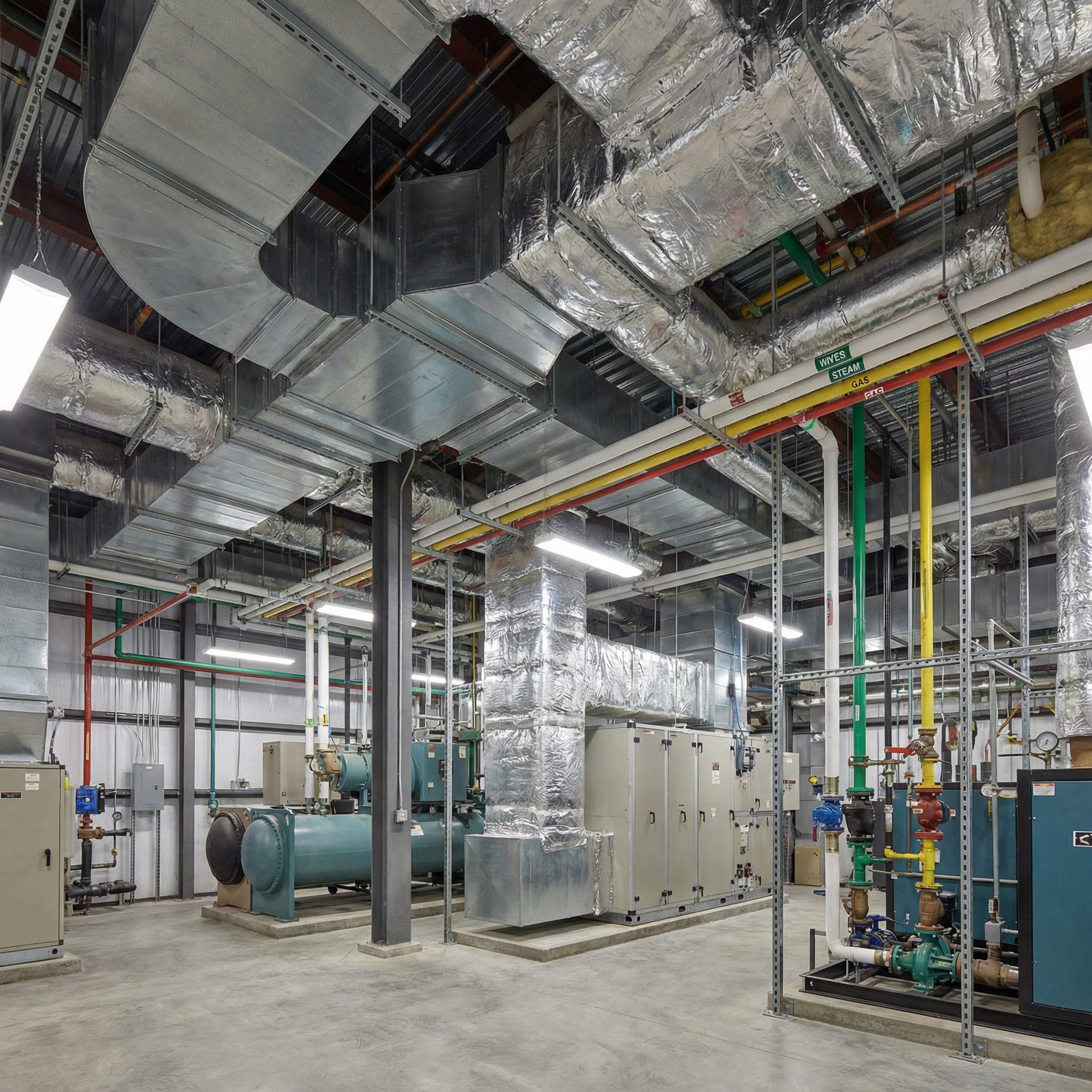
The Measures: What Was Fixed
A Building Tune-Up doesn't replace equipment — it optimizes what's already there. For this type of building, the measures implemented would include:
- Recommission building management system controls to eliminate simultaneous heating and cooling
- Re-enable and optimize night setback schedules (72°F heating / 76°F cooling during unoccupied hours)
- Clean evaporator and condenser coils on all four RTUs
- Verify and adjust refrigerant charge on all units
- Repair and program occupancy sensor wiring in common areas
- Calibrate economizer dampers (allows free cooling from outside air when conditions allow)
- Optimize supply air temperature reset schedules
No equipment purchases required. No operational disruptions. Most of the work can be completed after hours or on weekends to avoid impacting patient appointments.
The Results: 18% Reduction in Total Facility Energy
The 18% reduction comes primarily from three sources: eliminating simultaneous heating/cooling (estimated 6–8% savings), re-enabling night setback (estimated 5–7% savings), and coil cleaning plus refrigerant correction (estimated 3–5% savings). The lighting and economizer improvements contribute the balance.
The Pepco Rebate: Under Pepco's small commercial Building Tune-Up program, projects like this can receive rebates covering up to 80% of the assessment and tune-up cost. For a building in this size range, the rebate can offset $4,000–$8,000 of the project cost, bringing the net investment down to a level where payback is measured in months, not years.
Why Medical Offices Are Particularly Good Candidates
Medical office buildings consistently rank among the highest energy intensity commercial building types. According to DOE Commercial Buildings Energy Consumption Survey data, medical offices use roughly 2.5x more energy per square foot than standard office space. The reasons are understandable — longer hours, higher ventilation requirements, refrigeration for medications and vaccines, specialized equipment — but many of these buildings are also leaving significant energy savings uncaptured.
Buildings in the 10,000–75,000 sq ft range are the sweet spot for EmPOWER Maryland's small commercial Building Tune-Up program. They're large enough to have meaningful energy savings potential, but small enough to qualify for the enhanced rebate rates (up to 80–85%) that make the economics compelling.
If you manage a medical office, dental practice, urgent care facility, or similar healthcare building in the BGE or Pepco service territory, it's worth finding out what a tune-up assessment would reveal about your building's energy performance.
Could Your Building Be Wasting Energy Like This One?
Our licensed energy engineers will assess your building, identify the savings opportunities, and handle the EmPOWER Maryland rebate application. Schedule your no-cost walkthrough today.
Schedule a No-Cost Building Assessment